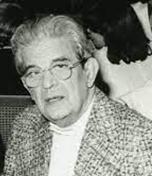
Country connection: Faladé was born in Porto-Novo in colonial Dahomey, now Benin, and later maintained intellectual and professional connections between Africa and France.
Why she matters
Solange Faladé’s record crosses medicine, anthropology, anticolonial student politics, and psychoanalysis. She developed seminars and institutions that carried her own reading of clinical work. [S1] [S2] [S3]
Historical context
Faladé arrived in France from Porto-Novo as a child and trained as a physician. African students were also building political organizations that challenged colonial rule and limits on participation in French intellectual life. [S1] [S2]
What she did
She completed medical training in Paris, conducted child-development and anthropological research, participated in the Federation of Black African Students in France, and studied and taught psychoanalysis. In 1983 she created her own psychoanalytic school. [S1] [S2] [S3]
How recognition was limited
Short summaries sometimes reduce Faladé to proximity with Jacques Lacan. Institutional records instead show a practitioner who organized, taught, published, and established a separate structure for clinical transmission. [S1] [S2] [S3]
Documented legacy
Her seminars circulated in published form, and French public history now places her among figures who widen the national record. Her burial in Porto-Novo reflects her connection to Benin. [S1] [S2]
What the evidence says
The BnF authority record fixes identity, dates, qualification, and institutional roles. The public-history volume and school memorial add context. The disputed superlative “first African psychoanalyst” is not used. [S1] [S2] [S3]
Uncertainty notes
- The often-repeated label “first African psychoanalyst” is omitted because the checked sources do not establish it with sufficiently independent support.
Sources
- [S1] Bibliothèque nationale de France. “Faladé, Solange (1925–2004).” BnF Catalogue général, n.d.. French. Accessed 2026-10-20.
- [S2] Pascal Blanchard et al.. “Portraits de France.” République française / Vie publique, 2021. French. Accessed 2026-10-20.
- [S3] École Freudienne. “Hommage à Solange Faladé.” École Freudienne, n.d.. French. Accessed 2026-10-20.
Corrections and disclosure
No corrections have been recorded.
AI-assisted tools helped organize the research and draft this article. The editorial evidence gate checked every publishable claim against the cited sources; model output is not treated as evidence.
See the correction policy or email corrections@muffinbiter.com.