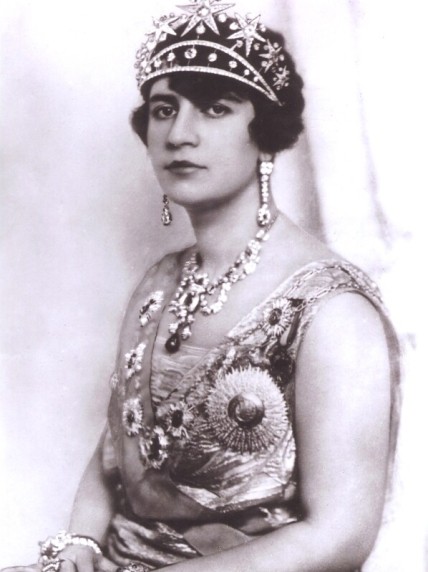
Country connection: Tarzi was born into an Afghan family in exile, returned to Kabul, and carried out her public educational and reform work as queen of Afghanistan.
Why she matters
Soraya Tarzi was not simply a symbol beside King Amanullah. Contemporary scholarship places her inside the reform project: she spoke about education, appeared publicly, and helped make women’s participation a question of national policy. [S1] [S2]
Historical context
Afghan reformers of the 1920s were trying to connect independence, state-building, and education. Tarzi’s arguments drew on Islamic precedents for women’s learning, rather than presenting education as a rejection of Afghan or Muslim life. [S2]
What she did
She supported girls’ schooling and women’s publishing, and used speeches and royal visibility to make women’s learning publicly discussable. Accounts also connect her and her mother with the women’s periodical Ershad-e Niswan. [S1] [S3]
How recognition was limited
The evidence places Tarzi inside a larger family and government reform network. Remembering that network avoids replacing the old king-centered account with another story in which one person acted alone. [S1] [S2]
Documented legacy
The program collapsed with Amanullah’s fall in 1929, but Tarzi’s attempt to join education, religious argument, and national independence remains an important early Afghan model of public advocacy for women. [S1] [S2]
What the evidence says
The evidence is strongest on Tarzi’s public advocacy and participation in educational reform. Sources sometimes attach “first” labels to institutions without consistent archival detail; this article therefore avoids unsupported priority claims. [S1] [S2] [S3]
Uncertainty notes
- Descriptions of particular institutions as Afghanistan’s “first” vary; the article does not rely on that superlative.
Sources
- [S1] Encyclopaedia Afghanica editors. “Soraya Tarzi.” Encyclopaedia Afghanica, n.d.. English. Accessed 2026-10-20.
- [S2] Marya Hannun. “Afghan Women, Islamic Education, and Reframing the Present.” Georgetown University Berkley Center, 2021. English. Accessed 2026-10-20.
- [S3] Jonathan Menge and Isabelle Mischke, editors. “Icons of Gender Justice: Paving the Way for Women’s Rights in Asia.” Friedrich-Ebert-Stiftung Nepal Office, Gender Justice Hub Asia, 2021. English. Accessed 2026-10-20.
Corrections and disclosure
No corrections have been recorded.
AI-assisted tools helped organize the research and draft this article. The editorial evidence gate checked every published claim against the cited sources; model output is not treated as evidence.
See the correction policy or email corrections@muffinbiter.com.